

shoelace size guide
Shoelace Size Guide: Finding the Perfect Fit
Finding the right shoelace length is crucial for both functionality and aesthetics. Too short, and you can’t tie a knot; too long, and you’re left with frustrating flopping!
This comprehensive guide will help you navigate shoelace sizing, covering charts, shoe types, and even brand-specific recommendations for a perfect fit.
Embarking on the quest for the perfect shoelace length can seem daunting, but it’s a surprisingly impactful detail. A properly sized shoelace isn’t merely about securing your footwear; it significantly influences comfort, style, and even safety.
Many individuals underestimate the importance of shoelace length, often resorting to haphazard replacements or accepting ill-fitting laces. This can lead to frustrating issues like constantly re-tying, uncomfortable pressure points, or an aesthetically displeasing appearance.
This guide aims to demystify the process, providing you with the knowledge and tools to confidently select the ideal shoelace length for any shoe. We’ll explore various methods, from measuring existing laces to utilizing comprehensive shoelace length charts, ensuring a secure and stylish fit every time. Understanding the nuances of shoelace sizing empowers you to elevate your footwear experience.
Ultimately, the goal is to eliminate the annoyance of inadequate laces and embrace the satisfaction of a perfectly tied shoe.
Why Shoelace Length Matters
The length of your shoelaces profoundly impacts the functionality and overall experience of wearing your shoes. A shoelace that’s too short simply won’t allow for a secure knot, leading to constant loosening and potential tripping hazards. This compromises safety and requires frequent adjustments throughout the day.
Conversely, excessively long shoelaces create a different set of problems. They tend to dangle and flop around, becoming a nuisance and a potential entanglement risk. Often, individuals resort to double-knotting, which can create unnecessary pressure and discomfort.
Beyond practicality, shoelace length contributes significantly to the aesthetic appeal of your footwear. Properly sized laces complement the shoe’s design, while ill-fitting laces can detract from its overall look. Choosing the correct length ensures a polished and put-together appearance. Finding the perfect fit is about more than just tying your shoes; it’s about enhancing both form and function.
Therefore, investing time in selecting the appropriate shoelace length is a worthwhile endeavor.

Understanding Shoelace Length Measurement
Accurate measurement is key to finding the perfect shoelace length. This involves either measuring your existing laces or utilizing a comprehensive shoelace length chart for guidance.
How to Measure Existing Shoelaces
Measuring your current shoelaces is a straightforward method for determining the ideal length for replacements. Begin by completely removing the laces from your shoes. This ensures an accurate measurement without any interference from the shoe’s structure.
Next, lay the shoelace flat on a clean, even surface. A table or floor works perfectly. It’s important to stretch the lace out straight, eliminating any curves or bends that could skew the results.
Using a ruler or measuring tape, measure the shoelace from tip to tip, including the aglets – those small plastic or metal caps at each end. These aglets are part of the overall length and should be factored into your measurement.
Record the measurement in inches or centimeters, depending on your preference. This measurement will serve as a reliable starting point when searching for new shoelaces. If you’re between sizes on a chart, it’s generally best to round up to ensure sufficient length for tying.
Remember, this method provides a good baseline, but consider other factors like lace width and tying style for a truly customized fit.
Using a Shoelace Length Chart
Shoelace length charts are invaluable tools when you can’t measure existing laces or are looking for a different length. These charts correlate shoe size or the number of eyelet pairs with recommended shoelace lengths, simplifying the selection process.
Most charts categorize shoes by type – sneakers, dress shoes, and boots – as each style typically requires different lace lengths. Locate the chart corresponding to your shoe type. Then, find your shoe size (US, UK, or EU) on the chart.
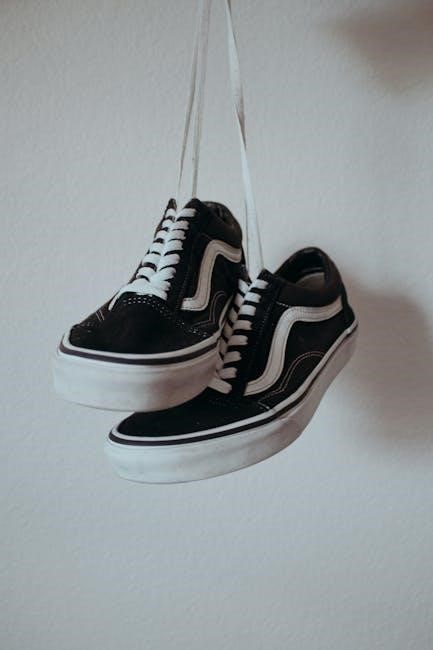
Alternatively, you can determine the appropriate length by counting the number of eyelet pairs on your shoe. Charts often provide length recommendations based on eyelet count. Remember that a higher eyelet count generally necessitates a longer lace.
When using a chart, consider it a guideline, not a rigid rule. Factors like tying style and personal preference can influence the ideal length. If you prefer a larger bow or a specific knot, you might opt for a slightly longer lace.
Always double-check the chart’s units (inches or centimeters) to avoid confusion.
Standard Shoelace Lengths by Shoe Type

Different shoe types require varying shoelace lengths for optimal fit and appearance; Sneakers, dress shoes, and boots each have typical length ranges based on design and eyelet count.
This section details common lengths for each category, helping you choose the perfect laces for your footwear.
Sneakers: Common Shoelace Lengths
Determining the ideal shoelace length for sneakers often depends on the shoe’s style and the number of eyelet pairs. Generally, sneakers fall into a few common length categories, ensuring a secure and comfortable fit.
For low-top sneakers with 5-6 eyelets, 36-45 inch (91-114 cm) laces are typically sufficient. These lengths provide enough lace to tie a standard knot without excessive dangling. Mid-top sneakers, featuring 6-8 eyelets, usually require 45-54 inch (114-137 cm) laces to accommodate the increased height and eyelet count.
High-top sneakers, with 8-10 or more eyelets, often benefit from 54-63 inch (137-160 cm) laces. This extra length is crucial for reaching all eyelets and achieving a secure tie. Remember, personal preference plays a role; some individuals prefer longer laces for styling purposes, like creating loops or bows.
Consider the lacing pattern you prefer. Certain patterns, like double-crossing, may necessitate longer laces. Always err on the side of slightly longer rather than too short, as you can always double-knot or tuck excess lace.
Dress Shoes: Optimal Shoelace Lengths
Dress shoes generally require shorter shoelaces compared to sneakers or boots, reflecting their lower profile and fewer eyelets. Achieving a clean, sophisticated look hinges on selecting the correct length, avoiding excessive lace visibility.
For most dress shoes with 3-5 eyelet pairs, 27-36 inches (69-91 cm) laces are considered optimal. This length provides enough lace for a secure tie without creating long, untidy loops. Oxfords, a classic dress shoe style, typically fall within this range.
Derby shoes, often featuring slightly more eyelets than Oxfords, may require laces up to 45 inches (114 cm). However, it’s crucial to avoid going too long, as dress shoes prioritize a streamlined appearance.
Consider the lace width alongside the length. Thinner laces are common in dress shoes, complementing their refined aesthetic. Accurate measurement is key; if unsure, opt for a slightly longer lace that can be trimmed if necessary, ensuring a polished finish.
Boots: Determining the Right Shoelace Length
Boots necessitate longer shoelaces due to their higher cut and increased number of eyelets. Selecting the appropriate length is vital for secure fastening and a comfortable fit, especially for work or hiking boots.
For most standard boots with 6-8 eyelets, 45-54 inches (114-137 cm) laces are generally sufficient. However, taller boots, such as those reaching the knee, will require significantly longer laces – often 54-72 inches (137-183 cm) or more.
Work boots and hiking boots frequently feature more eyelets for enhanced ankle support, demanding laces up to 72 inches (183 cm) or even longer. Consider lace thickness; thicker laces may require additional length for tying.
Measuring existing laces is the most reliable method for determining the correct length. If replacing, lay the old lace flat and measure end-to-end. Prioritize functionality and safety when choosing boot laces, ensuring a secure and comfortable experience.

Shoelace Length Based on Number of Eyelets
The number of eyelets directly impacts the required shoelace length. More eyelets necessitate longer laces for comfortable tying and a neat appearance.
This method offers a straightforward approach to finding the ideal shoelace size for various footwear styles.
Shoelace Length for Shoes with 6-8 Eyelets
For shoes featuring 6-8 eyelets, a shoelace length of 45 to 54 inches (114-137 cm) is generally recommended. This range accommodates most standard sneakers, casual shoes, and some dress shoes with a moderate number of eyelets.
However, it’s essential to consider the shoe’s overall design and your preferred tying style. If you favor a larger bow or prefer to wrap the laces around the ankle, opting for the longer end of the range – 54 inches – is advisable. Conversely, if you prefer a minimalist look with smaller bows, 45 inches might suffice.

Remember that these are guidelines, and variations can occur. Always prioritize a lace length that allows for a secure and comfortable knot without excessive dangling ends. A good rule of thumb is to ensure you have enough lace to comfortably double-knot if desired, providing extra security during activity.
Utilizing a shoelace length chart alongside this eyelet-based recommendation will further refine your selection, ensuring a perfect fit for your footwear.
Shoelace Length for Shoes with 9-12 Eyelets
Shoes with 9 to 12 eyelets typically require longer shoelaces, generally falling within the 54 to 63 inches (137-160 cm) range. This length is common for high-top sneakers, basketball shoes, and certain types of boots that demand more lace to reach all eyelets comfortably.
The specific length within this range depends on the shoe’s height and the distance between eyelets. Shoes with a taller profile or wider spacing will necessitate the longer end – 63 inches – to ensure sufficient lace for tying a secure knot.
Consider your tying preference; a larger, more decorative bow or wrapping the laces higher up the ankle will require extra length. Accurate measurement is key, as insufficient lace can lead to difficulty tying, while excessive length results in cumbersome dangling ends.
Referencing a shoelace length chart in conjunction with the eyelet count provides the most accurate determination for your specific shoe model, guaranteeing a perfect and functional fit.
Shoelace Length for Boots with 14+ Eyelets
Boots featuring 14 or more eyelets demand the longest shoelaces, typically ranging from 72 to 96 inches (183-244 cm) or even longer for exceptionally tall boots. This extended length is essential to navigate the numerous eyelets and achieve a secure, comfortable fit, especially in work boots or hiking boots.
The exact length needed is heavily influenced by the boot’s height and the eyelet configuration. Taller boots, naturally, require more lace. Furthermore, the lacing system – whether straight, diagonal, or a combination – impacts the necessary length.
Consider the desired lacing technique. Wrapping the laces around the calf for added support or creating a specific aesthetic requires extra length. It’s better to err on the side of slightly longer laces than to find yourself short.
Always consult a shoelace length chart and, if possible, measure existing laces for the most accurate replacement. Prioritize functionality and safety when selecting laces for boots with a high eyelet count.
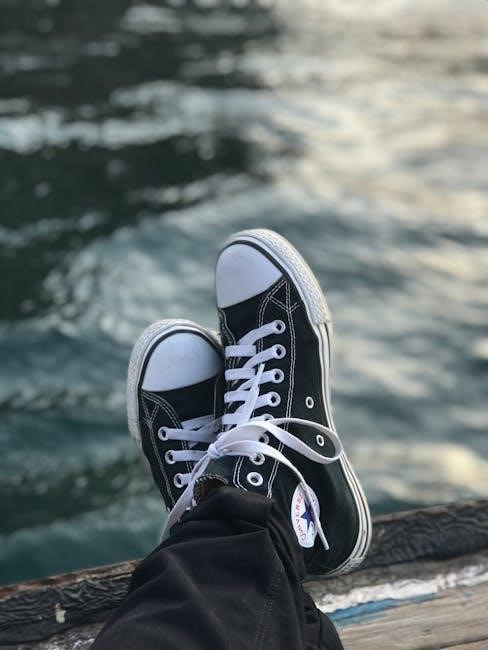
Brand-Specific Shoelace Lengths
Certain brands have unique lacing systems or shoe constructions. This section provides tailored shoelace length recommendations for popular brands like Vans, Converse, and Adidas.
Vans Shoelace Length Guide
Vans shoes, particularly the iconic Old Skool and Sk8-Hi models, often require specific shoelace lengths for optimal appearance and functionality. Determining the correct length depends on the model and your preferred lacing style.
Generally, for Vans Authentic and Era models with 6-8 eyelets, a 36-inch shoelace is a common choice. However, for the Old Skool and Sk8-Hi, which typically feature 9-12 eyelets, a 45-inch shoelace is often recommended. This provides enough length for comfortable tying and avoids excessively short laces.
If you prefer a more relaxed, looser lacing style, or if you frequently double-knot your laces, consider opting for a slightly longer length. Conversely, if you prefer a snug, minimalist look, a shorter lace might be preferable. Remember to account for the thickness of the laces as well; thicker laces may require a bit more length.
Ultimately, experimenting with different lengths is the best way to find what works best for your Vans and your personal preference. Don’t hesitate to try a few different sizes to achieve the perfect fit and style!
Converse Shoelace Length Guide
Converse Chuck Taylor All Stars, a timeless classic, benefit from correctly sized shoelaces to maintain their iconic look and ensure comfortable wear. The ideal length largely depends on the shoe model (Low Top, High Top) and the number of eyelets.
For Converse Chuck Taylor All Star Low Tops, which typically have 6-8 eyelets, a 33-36 inch shoelace is generally sufficient. However, for the High Top versions, featuring 9-12 eyelets, a 45-inch shoelace is usually the better choice, providing ample length for tying.
Consider your lacing style; if you prefer a tighter, more secure fit, or frequently double-knot, a slightly longer lace might be beneficial; Conversely, a minimalist aesthetic might call for a shorter lace. Lace thickness also plays a role – thicker laces require more length.
Finding the perfect length for your Converse can involve some experimentation. Utilizing a shoelace chart as a starting point and adjusting based on your preferences will guarantee a stylish and secure fit.
Adidas Shoelace Length Guide
Adidas sneakers, known for their diverse styles, require appropriately sized shoelaces for optimal performance and appearance. Determining the correct length depends on the specific Adidas model and its eyelet configuration.

Generally, for Adidas running shoes and lifestyle sneakers with 6-8 eyelets, a 39-45 inch shoelace is a common recommendation. However, Adidas basketball shoes and some high-top models, often featuring 9-12 eyelets, typically require a 45-54 inch lace to accommodate the increased number of eyelets.
Consider your preferred lacing technique. If you favor a snug, locked-down feel, or consistently double-knot, opting for a longer lace is advisable. Conversely, a cleaner, more streamlined look might benefit from a slightly shorter lace.
Adidas often uses varying lace lengths across different shoe lines. Consulting a shoelace chart specific to Adidas models, or measuring existing laces, will ensure a perfect fit and enhance your sneaker experience.
Factors Affecting Shoelace Length Choice
Shoelace width, material, and tying style all influence the ideal length. Thicker laces need more length, while double knotting requires extra to ensure a secure tie.
Shoelace Width and Material
The width of your shoelaces significantly impacts the length you’ll need. Wider, more substantial laces, like those often found in boots or some athletic shoes, require additional length compared to thinner, standard laces. This is because the increased bulk takes up more space when threading through eyelets and forming a knot.
Material also plays a role. For example, flat, polyester laces tend to be less bulky than round, waxed cotton laces. Waxed laces, offering a more classic look, often have a slightly larger diameter and may necessitate a longer lace to achieve a comfortable and secure tie.
Consider the texture too. Rougher materials might create more friction when pulling through eyelets, potentially requiring a bit more lace to work with. Always account for these factors when selecting a replacement lace, ensuring you don’t end up with a lace that’s too short to tie properly or too long and unwieldy.
Ultimately, understanding how lace width and material affect overall length is key to finding the perfect fit.
Tying Style and Preference
Your preferred shoelace tying method dramatically influences the length you require. A standard “bunny ears” knot uses less lace than a more elaborate, secure knot like the “Ian Knot,” known for its efficiency and tightness. If you consistently opt for complex tying styles, you’ll need longer laces to accommodate the extra wraps and loops.
Consider how much lace you like to have left over after tying. Some people prefer a neat, minimal finish with just enough lace to secure the knot, while others enjoy having longer tails for aesthetic reasons or for easier adjustment throughout the day.
Personal preference is paramount. Do you favor a snug, tight tie, or a looser, more comfortable feel? A tighter tie generally requires more lace length. Experimenting with different tying styles and lace lengths will help you discover what works best for your feet and your individual needs.
Ultimately, factoring in your tying style ensures a comfortable and personalized fit.
Double Knotting Considerations
If you frequently double knot your shoelaces for added security, particularly during high-impact activities, you’ll undoubtedly need longer laces. Double knotting consumes a significant amount of lace length, and insufficient length can lead to frustratingly short tails or an inability to complete the knot effectively.
Consider the type of activity. For casual wear, a single knot might suffice, but for running, hiking, or sports, a double knot provides peace of mind. Always err on the side of caution and choose a slightly longer lace if you anticipate needing the extra security of a double knot;
The frequency of re-tying is also a factor. If your laces come undone often, double knotting becomes a necessity, reinforcing the need for adequate length. A good rule of thumb is to add several inches to your calculated lace length if you consistently double knot.
Prioritizing security through double knotting requires thoughtful lace length selection.